Article
7 Jun 2026
What is a verifiable training credential, and why is a certificate PDF no longer enough?
What is a verifiable training credential, and why is a certificate PDF no longer enough? A certificate asserts; a verifiable credential proves. The four properties that make the difference for auditors.
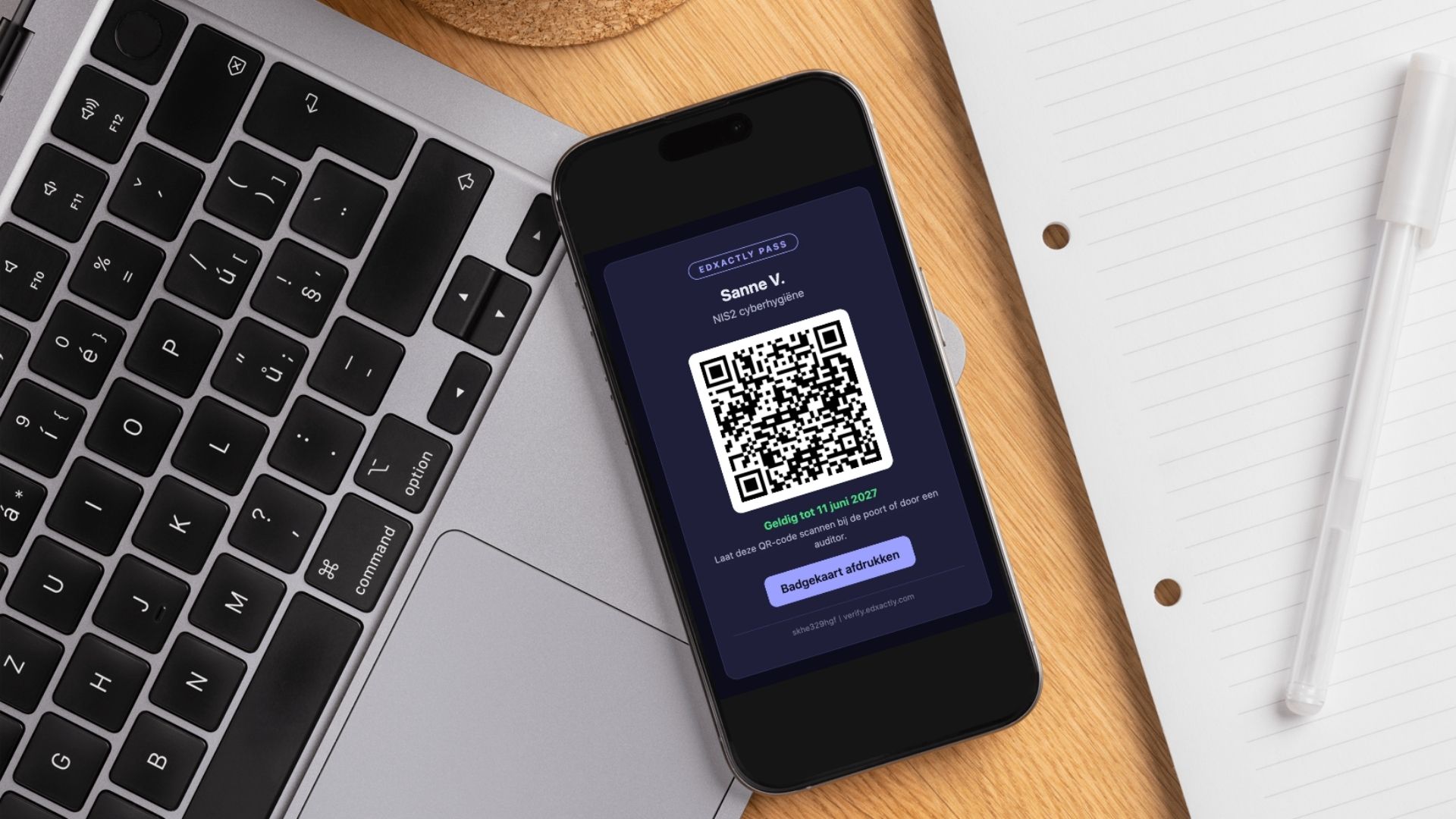
A verifiable training credential is a record of completed training that a third party can check at the source, live, without trusting the document in front of them. It binds four things together: who was trained, what claim the training supports, whether the credential is currently valid, and when it expires. A PDF certificate asserts; a verifiable credential proves.
What is wrong with the certificate PDF?
Nothing, in 2015. Today a certificate is a static image: it cannot expire visibly, cannot be revoked, can be edited by anyone with free software and tells a checker nothing about whether the person in front of them is the person named. Auditors know all of this, which is why questionnaires increasingly ask how evidence is verified rather than whether certificates exist.
What makes a credential verifiable?
Four properties. A unique identifier per credential, so each one can be looked up. A live status (valid, expired or revoked), so the truth is current rather than historical. Tamper evidence, typically a cryptographic signature, so an altered reference is detectably false. And scoped disclosure, so the checker sees only what they are entitled to see: a gate scan needs a name, a claim and a validity date, never a training history.
Where does the QR code fit?
The QR is just the handle: it carries a signed link to the live record. The verification is the lookup, not the code. This matters because it means revocation works instantly (the next scan shows the new status) and because a screenshot of a code without a valid signed record behind it shows nothing.
Where is this heading?
Toward credentials as infrastructure: workers carrying portable proof between assignments, clients verifying at the gate, auditors verifying from a desk, all against one register. For contingent workforces, where the same person may pass ten gates a year, training once and verifying everywhere is the only model that scales. It is the model behind EdXactly Pass and EdXactly Verify.
Last reviewed: June 2026. This article is general information and is not legal advice.